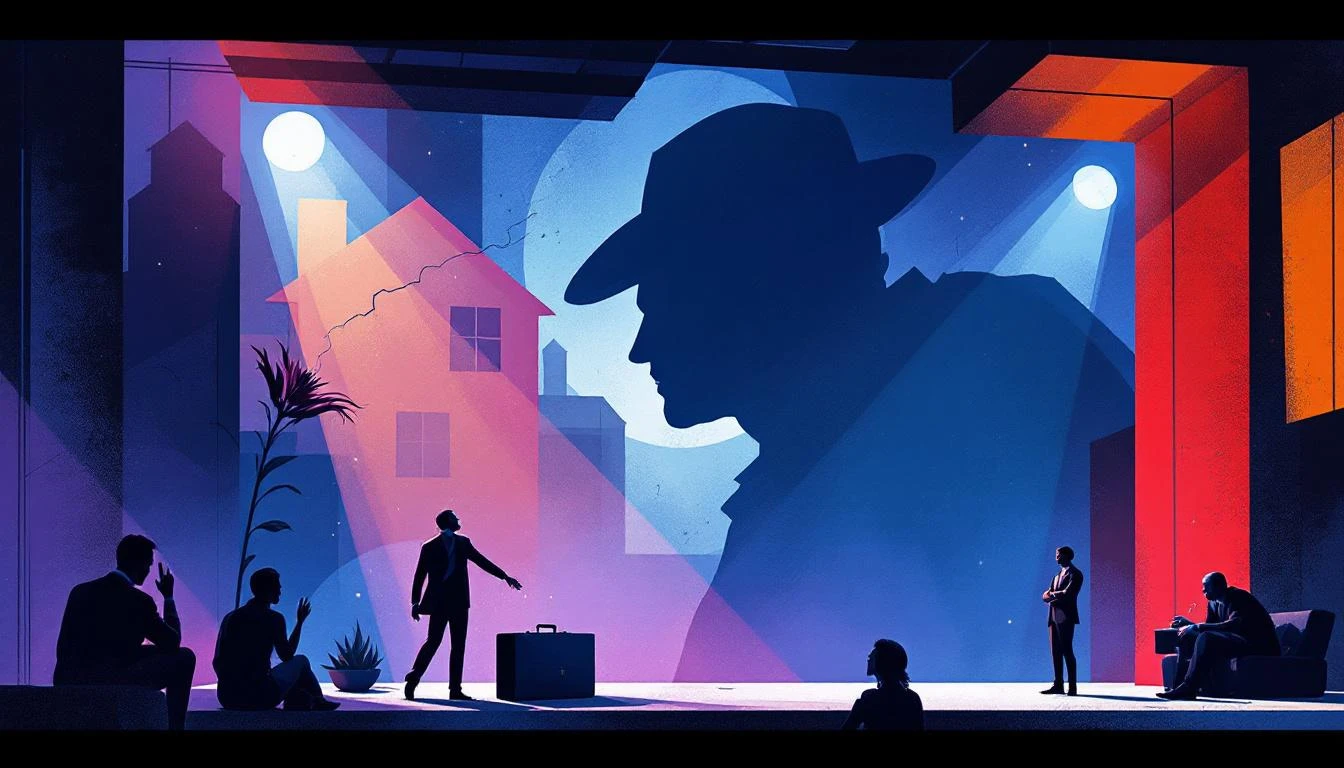
Broadway doesn’t revive Death of a Salesman because it’s “timely.” It revives it because actors want a mountain to climb—and audiences want to watch somebody attempt it.
So when you hear Nathan Lane and Laurie Metcalf attached to Salesman, the knee-jerk reaction around theater circles is basically two thoughts at once: (1) “Oh, that’s serious casting,” and (2) “Wait… didn’t we just do this?”
That second question is fair. The last Broadway revival is still fresh in a lot of people’s memory, and Salesman is, frankly, a taxing night out—the kind where you exit into the neon with your jaw clenched, reconsidering your life choices and your relationship to American ambition.
But this is also why it’s interesting. Lane’s whole deal is that he can make an audience howl and then, when he feels like it, take the floor out from under you. Metcalf does something even scarier: she makes emotional volatility look casual, like it’s just the weather.
If you’re tracking the season, you can browse the bigger context on our Broadway guide and the broader theater listings—but here’s the insider read on why this particular Salesman is already a conversation.
Nathan Lane Death of a Salesman Broadway: why this casting is a gamble
The citable answer: This revival matters because Lane and Metcalf don’t “honor the text.” They stress-test it. And Salesman can either deepen under that pressure—or turn into two hours of virtuoso misery with nowhere to go.
There’s a reason people say they’ll see Nathan Lane in anything. He’s a magnet. Even folks who claim they’re “done with revivals” suddenly start doing mental math about dates and credit card points when his name is on the marquee.
But that devotion cuts both ways. Lane brings expectations: timing, warmth, that shark-smooth command of a room. Salesman doesn’t reward charm. The danger is that the audience comes in ready to love him—and the play demands you watch a family grind itself down in public.
Metcalf is the stabilizer and the accelerant. If she’s playing Linda (or any central family role—casting specifics aside, the point is her presence in the domestic blast zone), she won’t pretty it up. People who’ve followed her stage work know she has a knack for turning “supportive spouse” into the person you can’t stop watching.
And here’s the friction: a lot of theatergoers genuinely ask whether Death of a Salesman is the right “big American play” to keep dragging back so often. Some would rather see other canon titles take the slot. Some just don’t want to pay Broadway prices to feel emotionally pummeled.
Death of a Salesman Broadway 2026: is it too soon after the last revival?
Direct answer: If you saw the 2022 revival, yes, it can feel soon. If you didn’t, 2026 is basically your next clean shot at the play with A-list leads.
The “too soon” argument isn’t snobbery—it’s fatigue. Salesman is not a light repertory staple like you’re rewatching a favorite sitcom. It’s heavy, and the title character can read as abrasive if you don’t buy the production’s emotional logic.
But Broadway economics don’t care about your emotional bandwidth. A title like Salesman is a recognizable brand with built-in curriculum clout, and casting like Lane/Metcalf is a way of saying: we’re not reviving this to be polite. We’re reviving it to win.
What changes the calculus is the kind of night Lane and Metcalf tend to deliver. The best revivals don’t answer “Why this play?” with a mission statement. They answer it with a new center of gravity—suddenly a scene you’ve half-forgotten becomes the one you can’t shake on the subway home.
If you’re browsing beyond Broadway for that week’s cultural mix, start from all NYC events and filter by mood—because Salesman pairs better with a post-show drink than a post-show debate.
Laurie Metcalf Broadway: the real reason people will buy the ticket
Direct answer: Metcalf is the actor you go to see because she doesn’t protect the audience from the character.
There’s a particular kind of Broadway performance that’s really “TV-famous person does theater correctly.” Metcalf is the opposite. She performs like the stage is a lab and you’re watching an experiment that might get out of hand.
And that’s exactly what Death of a Salesman needs. Not tasteful sorrow. Not prestige sadness. Pressure. The play is a family argument that metastasizes into an American myth—and Metcalf is unusually good at making family dynamics feel specific enough to be embarrassing.
Also: people still talk about the Virginia Woolf that never happened (the one that got away). So yes, there’s a little bit of “we’re owed this” energy when Metcalf steps back into a major Broadway moment.
The contrarian take is that Metcalf can make the evening feel even more brutal. If you’re hoping for “classic Broadway drama” as comfort food, she’s not your cook. She’s your knife.
Winter Garden Theatre: does the room fit a play this intimate?
Direct answer: The Winter Garden Theatre is a big Broadway barn, and Salesman is at its best when it feels like you’re trapped in the Lomans’ living room.
The Winter Garden Theatre has hosted plenty of huge, crowd-pleasing nights—exactly the kind where the audience arrives ready to be entertained. Salesman asks for something else: attention so focused you can hear a bad decision forming.
This is where direction and design matter more than the title. A smart production can “shrink” a large house with staging, sound, and a visual frame that keeps the family boxed in. A lazy one leaves you watching pain from a polite distance.
And yes, there’s a practical angle: in a large theater, even premium acting can feel generalized if you’re sitting too far back. If you’re the type who cares about micro-expressions—and with Metcalf, you should—seat choice becomes part of the artistic experience.
You can keep tabs on Broadway houses via NYC venues and plan your season like a grown-up, not like someone panic-buying tickets after an Instagram ad.
What people argue about with this play (and why that argument won’t die)
Direct answer: The fight is over whether Willy Loman is tragedy or just unbearable—plus whether Broadway should stop treating “American canon” like a limited menu.
Here’s what always happens with Salesman. Someone says it wrecked them. Someone else says they respect it but hate sitting through it. Someone else says we have other American plays that deserve the revival slot more.
And honestly? That argument is healthy. It means people aren’t sleepwalking through “important theater.”
My view: Salesman earns its revivals only when the casting changes the temperature of the evening. Lane and Metcalf can do that. Lane, especially, can complicate the reflex to either condemn Willy or pity him—because Lane has a way of making neediness funny until it isn’t.
But I’m not going to pretend this is a pleasant night. If you’re bringing a first-time Broadway tourist who wants sparkle, send them elsewhere and save this for the friend who enjoys leaving a theater slightly furious.
For a palate cleanser in the same week, you could pivot to live music—like Jonathan Scales Fourchestra at Iridium on Monday, March 9, 2026 (ticketing via Ticketweb: https://www.ticketweb.com/event/jonathan-scales-fourchestra-iridium-tickets/14150814). Different kind of virtuosity. Much less existential dread.
Practical info: how to plan your night like a local
Direct answer: Buy official tickets, pick a seat where acting reads clearly, and plan decompression time after.
A few things I’d tell a friend before they commit:
First, check the official on-sale and use the production’s official ticket source when it’s available. Broadway resale is where good intentions go to die.
Second, decide what you want from the night. If you want to watch acting, prioritize seats where faces are readable. If you want the collective experience—the hush, the shared discomfort—wider sections can be fine.
Third, build in a post-show plan. Salesman isn’t a “run to the subway while humming” show. It’s a “walk three avenues to reset your nervous system” show.
If you’re mixing your trip with other events, our all NYC events calendar is the easiest way to avoid accidentally stacking three emotionally intense nights in a row.
If you’re on the fence: who is this revival actually for?
Direct answer: Go if you care about actors taking big swings. Skip if you’re simply trying to complete a cultural checklist.
If you’ve never seen Death of a Salesman live, this is a strong entry point—because Lane and Metcalf are the kind of names that usually means the production intends to be actor-forward, not concept-forward.
If you saw the most recent revival and loved it, your question is whether you want a new interpretation or you just want to compare. There’s no shame in the comparison impulse. Theater people live for it.
If you saw a recent revival and found the play exhausting, don’t let anyone guilt you into it. The “it’s important” argument doesn’t pay your babysitter.
And if your interest is specifically Nathan Lane, I get it. People who’ve followed him for decades tend to treat his appearances like rare weather events: you don’t control them, you just prepare.
For something lighter that still scratches the “NYC performance” itch, scan comedy shows or go genre-hopping with jazz shows—because not every night needs to end with you staring at your ceiling.
What else to see that week in NYC (if you want contrast)
Direct answer: Pair Salesman with live music or a smaller room show—something that gives your brain a different texture.
If you’re in town around mid-March and want to build a week that isn’t wall-to-wall Broadway intensity, here are a few clean contrasts from our listings:
Jonathan Richman and Tommy Larkins at Baby’s All Right — Thursday, March 12, 2026; Friday, March 13, 2026; Saturday, March 14, 2026; Sunday, March 15, 2026; Monday, March 16, 2026. Venue page: Baby’s All Right. Official ticketing via Ticketmaster (example: https://www.ticketmaster.com/event/Z7r9jZ1A7-6rk).
If you want old-school NYC rock-room energy, Lonely Avenue at The Bitter End on Thursday, February 26, 2026 (tickets: https://bitterend.com/#/events/169237).
If your ears want something more polished (and your schedule hits April), Jonathan Butler at City Winery NYC on Sunday, April 5, 2026 (tickets: https://citywinery.com/new-york-city/event-series/jonathan-butler-oia3y2).
Those aren’t substitutes for Salesman. They’re antidotes. Different rooms, different stakes, different kinds of attention.
The bottom line on Death of a Salesman Broadway 2026
Direct answer: This revival’s selling point isn’t that Death of a Salesman is back. It’s that Lane and Metcalf are willing to make it ugly up close.
Yes, it’s soon. Yes, it’s heavy. And yes, some people will complain that Broadway keeps circling the same titles.
But casting this sharp changes the question from “Do we need Salesman again?” to “What happens when two of Broadway’s heaviest hitters walk into the heaviest play and refuse to make it comfortable?”
That’s not for everyone. It’s for the people who go to theater to feel something specific—and then argue about it afterward.
If you’re planning your season, start with Broadway shows in NYC, browse artists when you’re chasing names, and keep venues bookmarked so you’re never the person frantically Googling an address at 7:55 PM.